
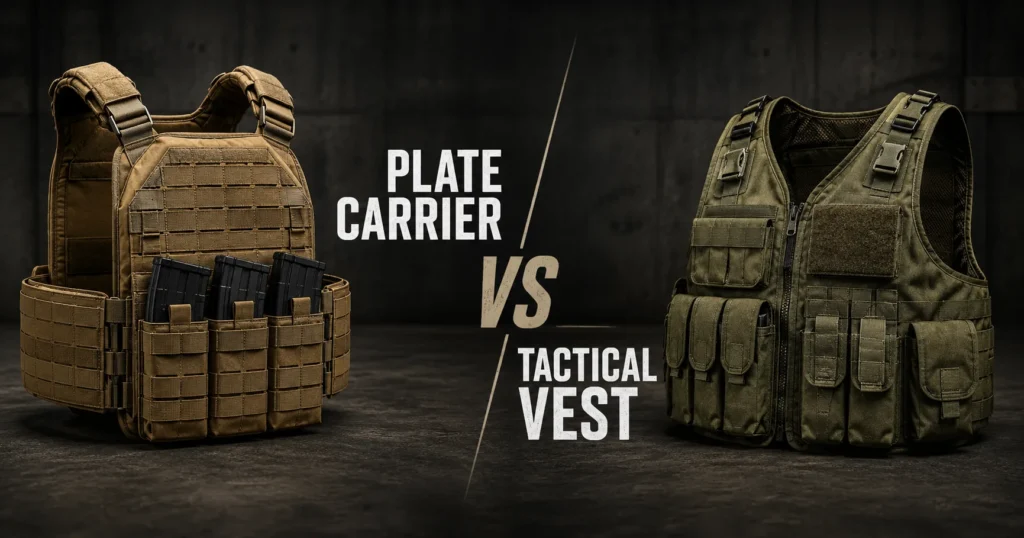
When shopping for tactical gear, two terms often appear side by side plate carrier and tactical vest. At first glance, they may look similar. Both are worn over the torso, both can carry gear, and both are commonly used in airsoft, outdoor training, security, military inspired loadouts, and tactical style setups. However, they are not the same.
Understanding the difference between a plate carrier and a tactical vest is important before choosing your gear. The right option depends on your purpose, your loadout, your comfort needs, and whether you need armor plate compatibility or simply a lightweight way to carry equipment.
This guide explains the key differences between plate carriers and tactical vests, including protection level, weight, comfort, storage capacity, mobility, and ideal use cases.
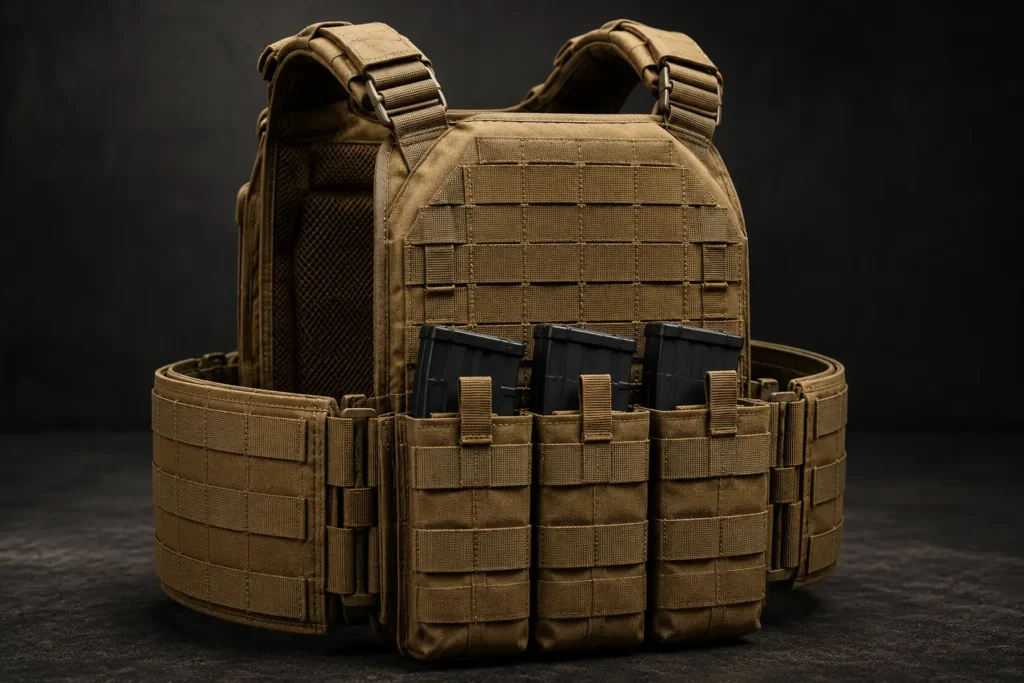
What Is a Plate Carrier
A plate carrier is a tactical vest designed to hold armor plates in the front and back plate bags. Some models may also support side plates through compatible cummerbunds or side plate pockets.
The main purpose of a plate carrier is to provide a platform for carrying protective plates while also allowing the user to attach pouches, magazines, medical kits, communication gear, admin panels, hydration systems, and other tactical accessories.
For a more detailed buying guide, you can read our complete guide on how to choose a plate carrier.
Most modern plate carriers use MOLLE webbing or laser cut attachment panels, allowing users to customize their setup based on mission, training, airsoft, range use, or outdoor requirements.
It is important to note that a plate carrier alone does not provide ballistic protection unless it is used with properly rated armor plates. The carrier is only the platform. The actual protection depends on the plates inserted inside it.
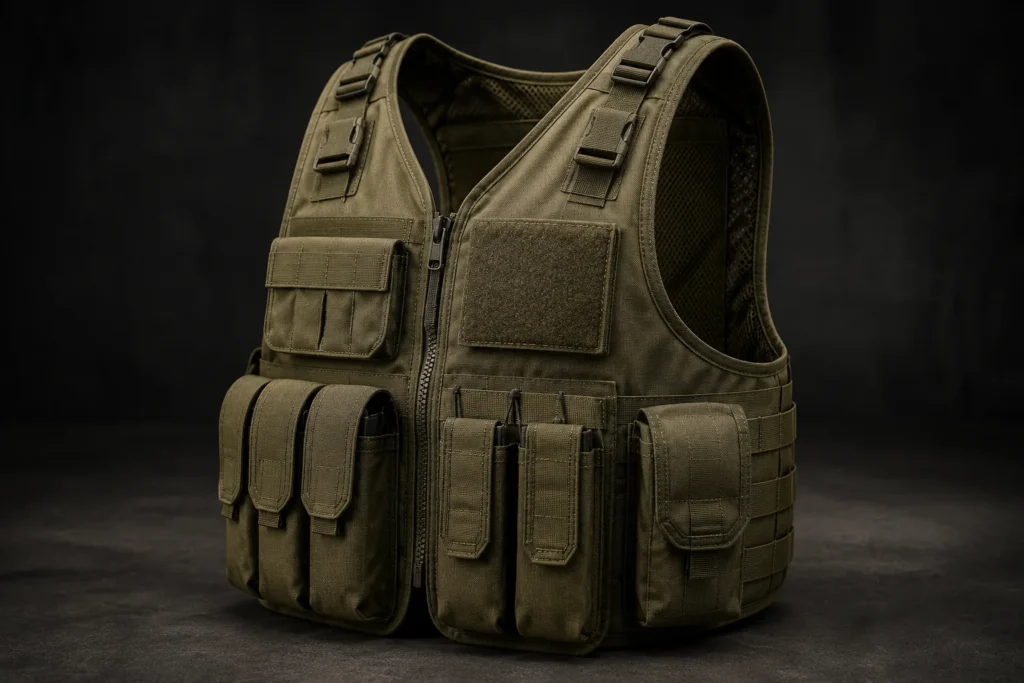
What Is a Tactical Vest
A tactical vest is a general purpose gear carrying vest designed to organize and carry equipment around the torso. Unlike a plate carrier, a standard tactical vest is not always designed to hold armor plates.
Tactical vests often come with built in pouches, zipper pockets, magazine holders, utility compartments, radio pockets, and adjustable straps. They are commonly used for airsoft, paintball, outdoor activities, security style uniforms, range training, and general tactical loadouts.
Some tactical vests include plate pockets, but many are mainly built for carrying gear rather than supporting heavy armor plates. They are usually lighter, more flexible, and easier to wear for long periods compared with full plate carrier setups.
Main Difference Between Plate Carrier and Tactical Vest
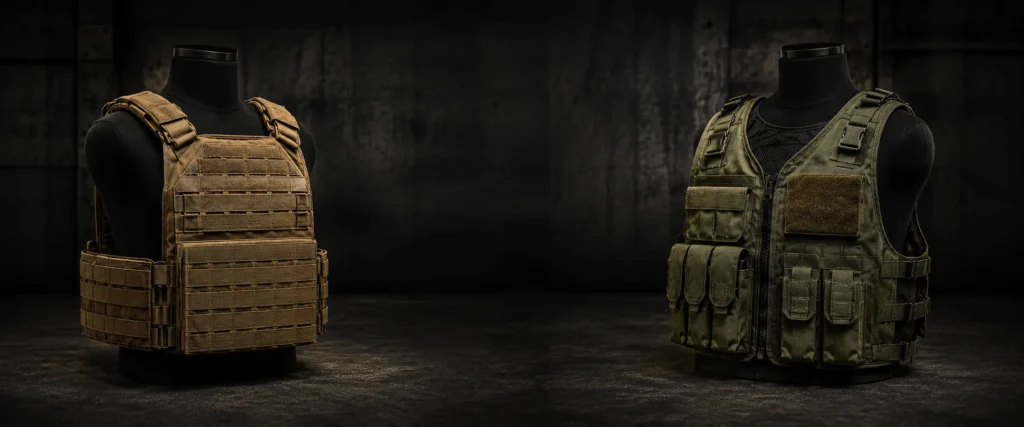
The biggest difference between a plate carrier and a tactical vest is their primary purpose.
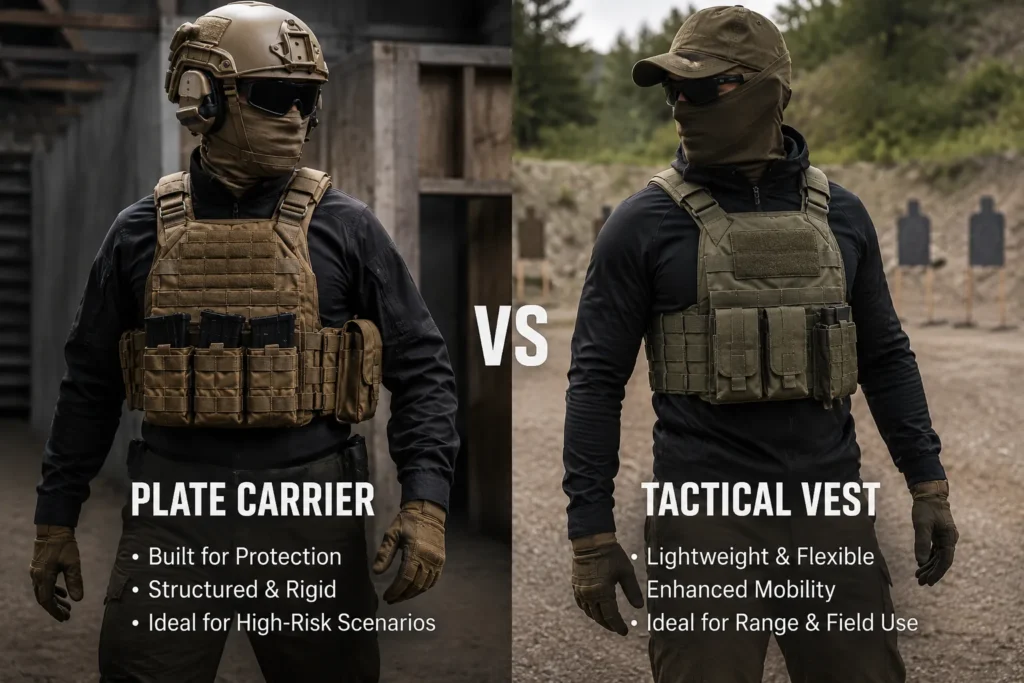
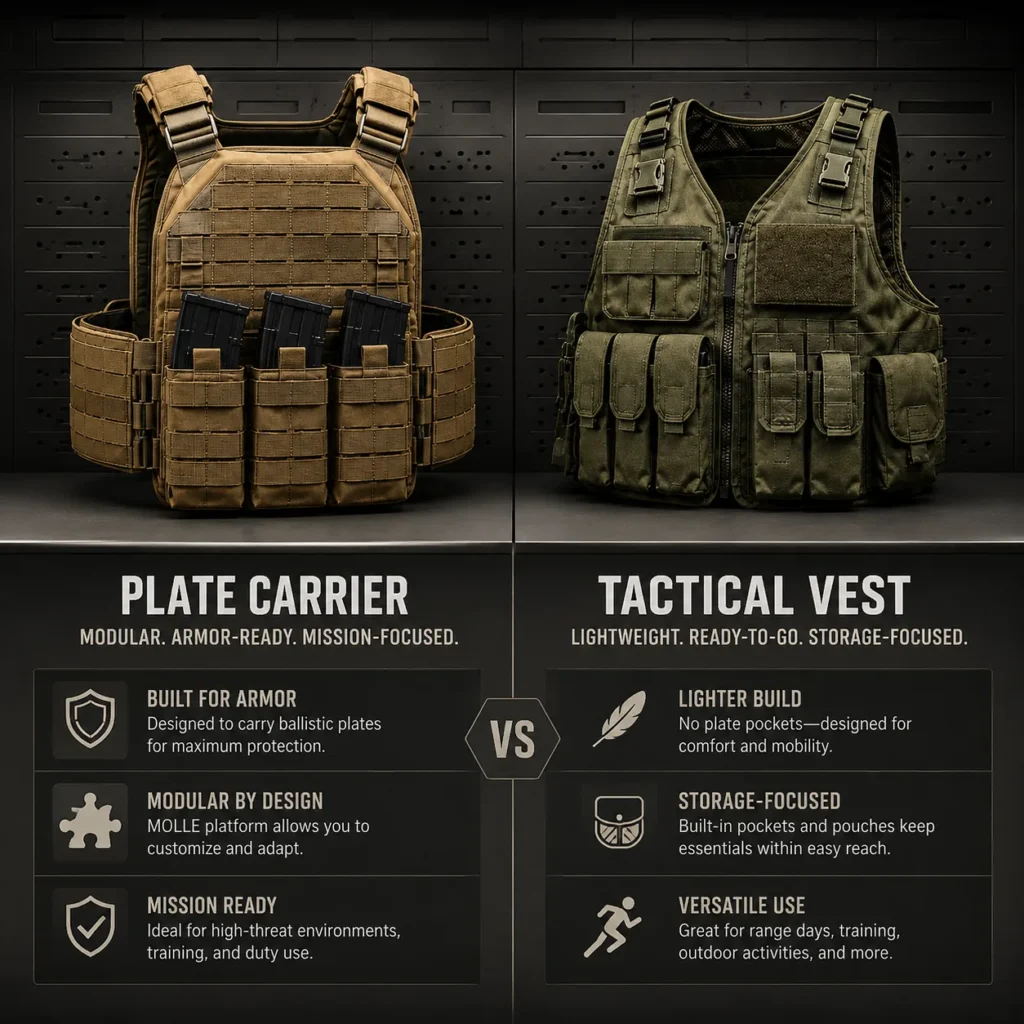
A plate carrier is designed to carry armor plates and tactical accessories. A tactical vest is mainly designed to carry gear and organize equipment.
This difference affects everything else, including weight, comfort, structure, protection potential, loadout style, and mobility.
Plate Carrier Protection
A plate carrier is the better option if your priority is armor plate compatibility. It has dedicated front and rear plate bags that are shaped to hold hard armor plates or training plates.
Many plate carriers also include a cummerbund system that can support side plate pockets. This gives the user more coverage options and a more secure fit.
However, protection depends entirely on the armor plates used. A plate carrier without plates is mainly a load bearing vest. It should not be considered protective equipment unless it is used with certified armor plates that meet the required safety standards.
Tactical Vest Protection
A tactical vest usually offers little to no ballistic protection unless it specifically includes armor plate pockets and is used with compatible protective inserts.
Most tactical vests are designed for equipment organization, not armor protection. They may provide coverage from fabric layers, padding, or reinforced material, but that is not the same as ballistic protection.
For airsoft, outdoor training, and costume or loadout purposes, a tactical vest may provide enough coverage and convenience. For situations where certified protection is required, a proper plate carrier with rated plates is usually the more suitable choice.
Weight and Comfort
Plate carriers are generally heavier than tactical vests, especially when loaded with armor plates, magazines, medical gear, hydration, and utility pouches. The weight can become significant, so fit and adjustment are very important.
A good plate carrier should sit high on the torso, cover the vital chest area, and remain stable during movement. Shoulder straps and cummerbund tension help distribute the weight, but a fully loaded carrier can still feel rigid and heavy.
Tactical vests are usually lighter and more comfortable for long wear. Since many tactical vests are made without armor plates, they allow more flexibility and airflow. This makes them easier to wear during airsoft games, outdoor activities, training sessions, or casual tactical use.
Mobility and Flexibility
A plate carrier gives a more structured and secure fit, but it may limit movement depending on plate size, carrier design, and loadout weight. A minimalist plate carrier can still offer good mobility, but a heavily loaded setup can restrict shoulder movement, bending, and fast transitions.
A tactical vest usually offers better flexibility because it does not need to hold rigid plates. The body can move more naturally, and the user may feel less restricted during running, crouching, climbing, or long outdoor movement.
For users who value speed and comfort over armor plate compatibility, a tactical vest can be a practical option.
Load Carrying Capacity
Both plate carriers and tactical vests can carry gear, but they do it differently.
A plate carrier usually starts as a modular platform. You add the pouches and accessories you need. This gives you more customization and a cleaner setup, especially if you use MOLLE compatible pouches.
A tactical vest often comes with built in pouches and compartments. This makes it easy to use right away without buying many extra accessories. However, built in pouch layouts may limit customization.
If you want a fully customized loadout, a plate carrier is usually better. If you want a ready to use gear vest with built in storage, a tactical vest may be easier.
Customization
Plate carriers are highly customizable. You can add magazine pouches, admin pouches, radio pouches, medical kits, side pouches, hydration packs, placards, chest rigs, and quick release cummerbunds.
Many plate carriers also support front placard systems, allowing users to swap loadouts quickly. This is useful for people who use different setups for airsoft, range training, outdoor activities, or tactical drills.
Tactical vests can also be customizable, especially if they include MOLLE panels. However, many tactical vests have fixed pouch layouts, which may not be as flexible as a plate carrier.
If you are building your first loadout, check our plate carrier setup guide for beginners to learn how to arrange pouches, magazines, and accessories properly.
Breathability and Heat
Plate carriers can feel hotter because they cover the front and back torso with plate bags. When plates are inserted, airflow is reduced even more. In hot weather, this can cause discomfort during long use.
Tactical vests usually have better ventilation, especially mesh based designs. Since they often do not carry plates, they allow more airflow and feel less restrictive in warm environments.
For summer airsoft games, hiking, outdoor training, or extended casual use, a tactical vest may feel more comfortable.
Durability
Durability depends on the material, stitching, hardware, and construction quality.
A high quality plate carrier is usually made from strong nylon fabric, reinforced stitching, durable buckles, heavy duty hook and loop panels, and reliable MOLLE attachment points. Because it is designed to carry weight, construction quality is very important.
A tactical vest can also be durable, but lighter models may not be built for heavy loads. If you plan to carry magazines, tools, hydration, or other accessories, choose a vest with strong fabric, reinforced seams, and reliable adjustment points.
Best Uses for a Plate Carrier
A plate carrier is ideal for users who need armor plate compatibility, a professional tactical appearance, and a modular loadout platform.
It is commonly used for military inspired setups, law enforcement style training, airsoft milsim games, tactical range use, security training, and serious loadout customization.
A plate carrier is also a strong choice for users who want a more realistic tactical setup with front and rear plate bags, MOLLE webbing, cummerbund options, and mission specific pouch placement.
Best Uses for a Tactical Vest
A tactical vest is ideal for users who want a lightweight and practical way to carry gear without the weight and structure of armor plates.
It is commonly used for airsoft, paintball, outdoor activities, hunting style setups, range practice, security uniforms, cosplay, and general tactical organization.
A tactical vest is also a good choice for beginners because many models come with built in pouches and are easier to adjust.
Plate Carrier for Airsoft
For airsoft players, a plate carrier offers a realistic look and a highly customizable platform. It works well for milsim games and players who want to build a professional loadout.
Airsoft users often use foam plates or lightweight training plates instead of heavy armor plates. This helps the carrier keep its shape while reducing weight.
A plate carrier can hold airsoft magazines, radio gear, hydration, admin tools, and medical style pouches. However, players should avoid overloading the carrier because too much weight can reduce speed and comfort during long games.
Tactical Vest for Airsoft
A tactical vest is one of the easiest options for airsoft beginners. It is lighter, affordable, and often comes with magazine pouches already attached.
For casual games, a tactical vest may be more comfortable than a plate carrier. It allows better movement and does not require extra plates or many separate pouches.
If your goal is comfort, simple gear storage, and easy setup, a tactical vest is a great airsoft choice.
Which One Is Better for Beginners
For beginners, the better choice depends on the intended use.
Choose a tactical vest if you want something simple, lightweight, affordable, and ready to use.
Choose a plate carrier if you want a more modular, realistic, and upgradeable setup.
A tactical vest is usually easier for first time users. A plate carrier is better for users who want long term customization and a more professional tactical platform.
Which One Is Better for Heavy Loadouts
A plate carrier is usually better for heavy loadouts because it is built with stronger structure and better load bearing capability. The cummerbund, shoulder straps, and MOLLE panels are designed to support accessories in a stable way.
However, carrying too much gear can still reduce comfort and mobility. A good setup should balance protection, storage, and movement.
A tactical vest can carry plenty of gear, but it may not distribute heavy weight as well as a properly fitted plate carrier.
How to Choose Between a Plate Carrier and a Tactical Vest
Start by asking what you need the gear to do.
If you need armor plate compatibility, choose a plate carrier.
If you only need to carry gear, choose a tactical vest.
If you want maximum customization, choose a plate carrier.
If you want lightweight comfort, choose a tactical vest.
If you are building a serious airsoft milsim loadout, choose a plate carrier.
If you are playing casual airsoft or need a simple outdoor gear vest, choose a tactical vest.
The best choice is not always the most expensive or the most tactical looking option. The best choice is the one that fits your purpose, body type, activity level, and loadout needs.
Common Mistakes to Avoid
Many users choose gear based only on appearance. A vest may look professional, but if it does not fit well or support your gear properly, it will not perform well.
Another common mistake is overloading the setup. Too many pouches can make the vest heavy, bulky, and uncomfortable.
Some users also confuse a plate carrier with body armor. A plate carrier does not provide ballistic protection by itself. It must be used with properly rated armor plates if protection is required.
Fit is also important. A plate carrier should sit high on the torso and should not hang too low. For a complete sizing and adjustment guide, read our article on how a plate carrier should fit.
Final Verdict
A plate carrier and a tactical vest may look similar, but they are designed for different purposes.
A plate carrier is best for users who need armor plate compatibility, modular customization, and a professional tactical platform. It is ideal for serious loadouts, milsim airsoft, range training, and users who want a more structured setup.
A tactical vest is best for users who want lightweight comfort, easy gear organization, and a ready to use setup. It is ideal for casual airsoft, outdoor activities, beginner loadouts, and users who do not need armor plate compatibility.
If your priority is protection potential and customization, choose a plate carrier. If your priority is comfort, simplicity, and gear storage, choose a tactical vest.
Both options can be useful. The right choice depends on how you plan to use your gear.
If you are ready to build your own tactical loadout, explore our plate carrier collection, tactical vest collection, and plate carrier accessories to find the right setup for your needs.