
Introduction
Choosing your first plate carrier can feel overwhelming. There are different sizes, materials, cummerbund styles, pouch layouts, MOLLE systems, shoulder straps, quick-release designs, and countless setup options. For beginners, the biggest challenge is not simply finding a plate carrier that looks good. It is finding one that fits properly, feels comfortable, supports your gear, and matches the way you plan to use it.
A well-chosen plate carrier can provide a stable platform for training gear, airsoft loadouts, range accessories, outdoor equipment, and tactical-style setups. However, the wrong carrier can feel bulky, restrict movement, sag under weight, or make your setup harder to use.
This beginner’s guide explains what to look for when choosing a plate carrier, how it should fit, which features matter most, and how to avoid common buying mistakes.
What Is a Plate Carrier?
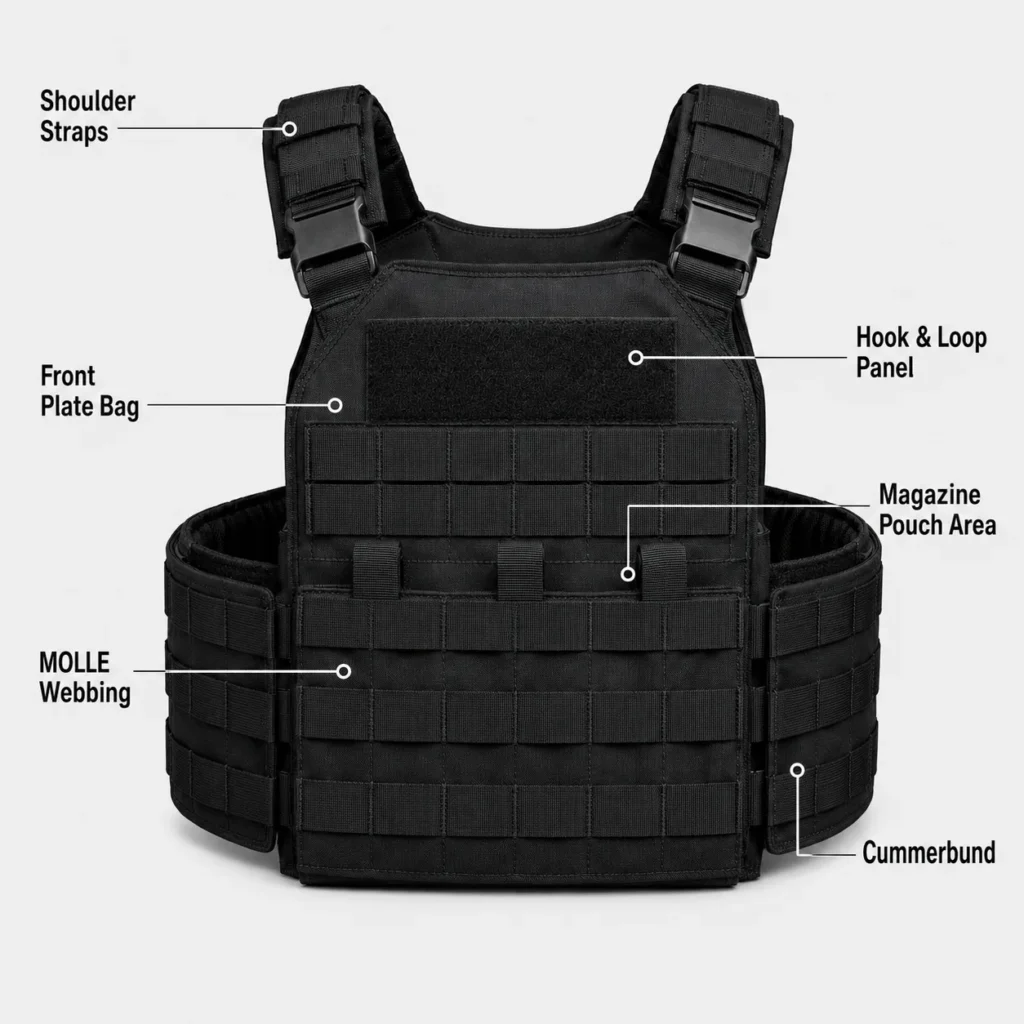
A plate carrier is a tactical-style vest designed to hold front and rear armor plates or training plates while also providing attachment points for gear such as magazine pouches, admin pouches, utility pouches, radio pouches, hydration carriers, and other accessories.
Unlike a basic tactical vest, a plate carrier is usually more compact and modular. Most models include front and rear plate bags, adjustable shoulder straps, a cummerbund or side straps, and MOLLE webbing or hook-and-loop panels for customization.
For many users, a plate carrier is not just a vest. It is the foundation of an entire loadout.
Who Uses a Plate Carrier?
Plate carriers are used in a variety of settings, including:
- Airsoft and MilSim games
- Range training
- Fitness and weighted vest-style training
- Outdoor tactical-style activities
- Professional training environments
- Gear organization and load carriage
For civilian users, especially beginners, the most important factor is choosing a carrier that fits your activity. A lightweight airsoft setup will not require the same configuration as a heavy-duty range training setup. Similarly, a minimalist carrier for mobility will feel very different from a fully loaded tactical-style platform.
Before buying, ask yourself: What will I actually use this plate carrier for?
Plate Carrier vs Tactical Vest: What’s the Difference?
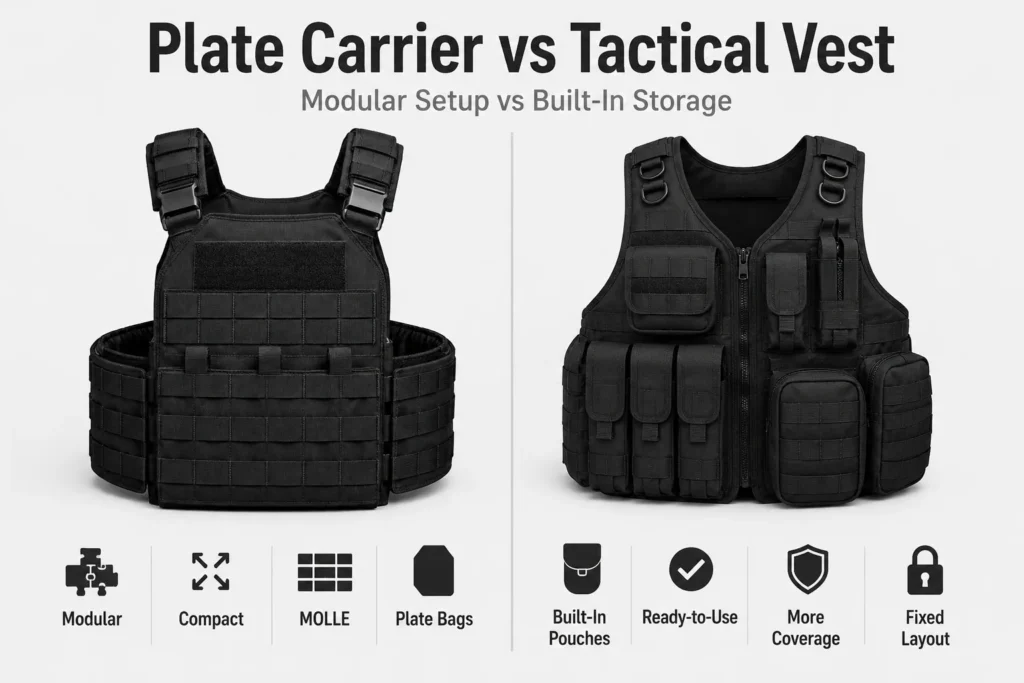
A plate carrier and a tactical vest may look similar, but they are not the same.
A tactical vest is usually designed mainly for carrying gear. It may include built-in pouches, zippers, mesh panels, and fixed storage areas. Tactical vests are often easier for beginners because the layout is already built in.
A plate carrier, on the other hand, is more modular. It is designed around front and rear plate bags and usually allows the user to customize the setup with MOLLE pouches, placards, cummerbund attachments, and other accessories.
In simple terms:
A tactical vest is usually more ready-to-use out of the box.
A plate carrier gives you more control over fit, weight distribution, and gear placement.
If you want a flexible setup that can evolve over time, a plate carrier is often the better choice.
How Should a Plate Carrier Fit?
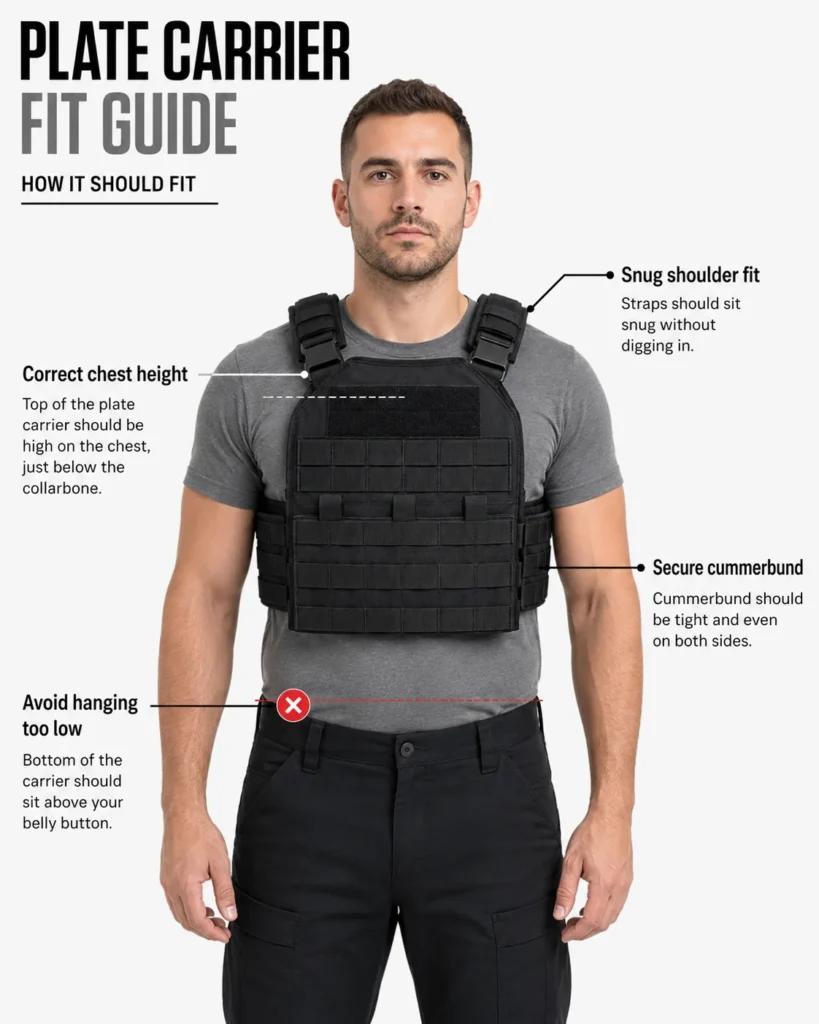
Fit is one of the most important factors when choosing a plate carrier. A good plate carrier should feel secure without restricting your breathing or movement.
The front plate bag should sit high on the chest. It should not hang low over your stomach. The rear plate bag should sit at a similar height on your back. If the carrier rides too low, it can feel unstable and uncomfortable during movement.
The shoulder straps should be adjusted evenly so the carrier does not tilt forward or backward. The cummerbund should wrap firmly around your torso, but it should not be so tight that it limits breathing or makes it difficult to move.
A properly fitted plate carrier should:
- Sit high on the chest and upper back
- Stay stable during movement
- Allow you to raise your arms comfortably
- Avoid excessive bouncing
- Keep weight balanced between the front, back, and sides
- Feel snug without cutting into your body
If the plate carrier shifts too much when you walk, run, crouch, or bend, it may need adjustment or a better-fitting cummerbund.
Choosing the Right Plate Carrier Size
Many beginners assume that plate carrier sizing is based only on body size. In reality, plate carrier size is often related to the size of the plate or insert the carrier is designed to hold. However, body shape still matters because shoulder straps, cummerbund length, and torso fit affect comfort.
When choosing a size, pay attention to:
- Plate bag dimensions
- Adjustable shoulder strap range
- Cummerbund size and elasticity
- Torso coverage
- Product size chart
- Whether the carrier is designed for a slim, standard, or larger body type
If you are between sizes, check whether the carrier has enough adjustment range. A highly adjustable shoulder strap and cummerbund system can make a big difference, especially for beginners.
Key Features to Look for in a Plate Carrier
1. Comfortable Shoulder Straps
Shoulder straps carry a large portion of the load. Thin or poorly padded straps can become uncomfortable, especially when the carrier is loaded with pouches and accessories.
Look for shoulder straps that are adjustable, durable, and compatible with shoulder pads. If you plan to wear the carrier for long sessions, shoulder comfort should be a priority.
2. Adjustable Cummerbund
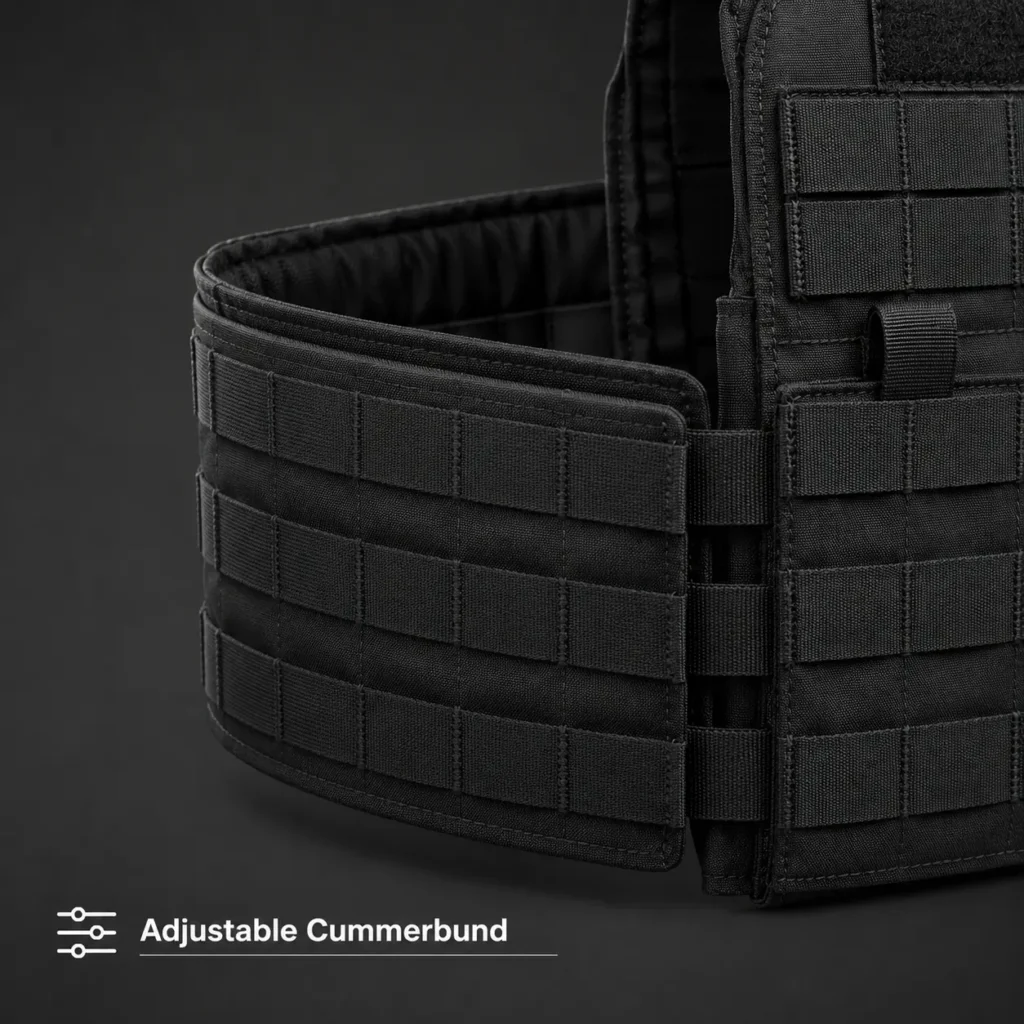
The cummerbund is the side section that wraps around your torso. It helps stabilize the carrier and can also provide extra attachment space for pouches.
There are several common cummerbund styles:
- Elastic cummerbund
- MOLLE cummerbund
- Quick-release cummerbund
- Skeletonized cummerbund
- Hybrid cummerbund
For beginners, an elastic cummerbund can be a comfortable option because it offers flexibility and a close fit. MOLLE cummerbunds provide more attachment options, while quick-release systems make the carrier easier to put on and remove.
Choose based on your setup needs. If comfort and flexibility matter most, elastic designs are a strong choice. If carrying more side-mounted gear is important, MOLLE compatibility may be better.
3. MOLLE Compatibility
MOLLE webbing allows you to attach pouches and accessories to your plate carrier. This is one of the main reasons people choose plate carriers over fixed tactical vests.
With MOLLE, you can add:
- Magazine pouches
- Utility pouches
- Admin pouches
- Medical-style pouches
- Radio pouches
- Hydration attachments
- Dump pouches
- Backpack or rear panel attachments
A MOLLE-compatible plate carrier gives you more freedom to build your loadout according to your activity.
4. Front Placard Compatibility
Many modern plate carriers use a front placard system. A placard is a removable front panel that can hold magazine pouches or other accessories. This allows you to switch setups quickly without rebuilding the entire carrier.
For example, you might use one placard for airsoft, another for range training, and another for a lightweight outdoor setup.
If you like modular gear, placard compatibility is a valuable feature.
5. Durable Materials
A plate carrier should be made from durable fabric with reinforced stitching. Common materials include nylon fabrics and heavy-duty tactical textiles. The exact material may vary by product, but the key is durability, abrasion resistance, and reliable construction.
Check areas that usually experience stress, such as:
- Shoulder strap connection points
- Cummerbund attachment areas
- MOLLE webbing
- Plate bag seams
- Hook-and-loop panels
- Drag handle area, if included
Good stitching and reinforced stress points are just as important as the fabric itself.
6. Breathability and Padding
Plate carriers can become warm during extended use. Breathable mesh panels, inner padding, and airflow channels can improve comfort.
If you plan to wear the carrier outdoors, during training, or for airsoft games, breathability matters. A carrier that feels fine for five minutes may become uncomfortable after an hour of movement.
Look for features such as:
- Mesh inner lining
- Padded plate bags
- Ventilation channels
- Lightweight construction
- Removable shoulder pads
Comfort often determines whether you will actually use the carrier regularly.
7. Quick-Release Function
A quick-release system allows the user to remove the plate carrier quickly. Some designs use buckles, tubes, cables, or hook-and-loop systems.
For beginners, quick-release features can make the carrier more convenient. They are especially useful if you frequently put the carrier on and take it off during training or airsoft sessions.
However, quick-release systems vary in quality. Make sure the release mechanism feels secure and does not accidentally open during movement.
How to Set Up a Plate Carrier for Beginners
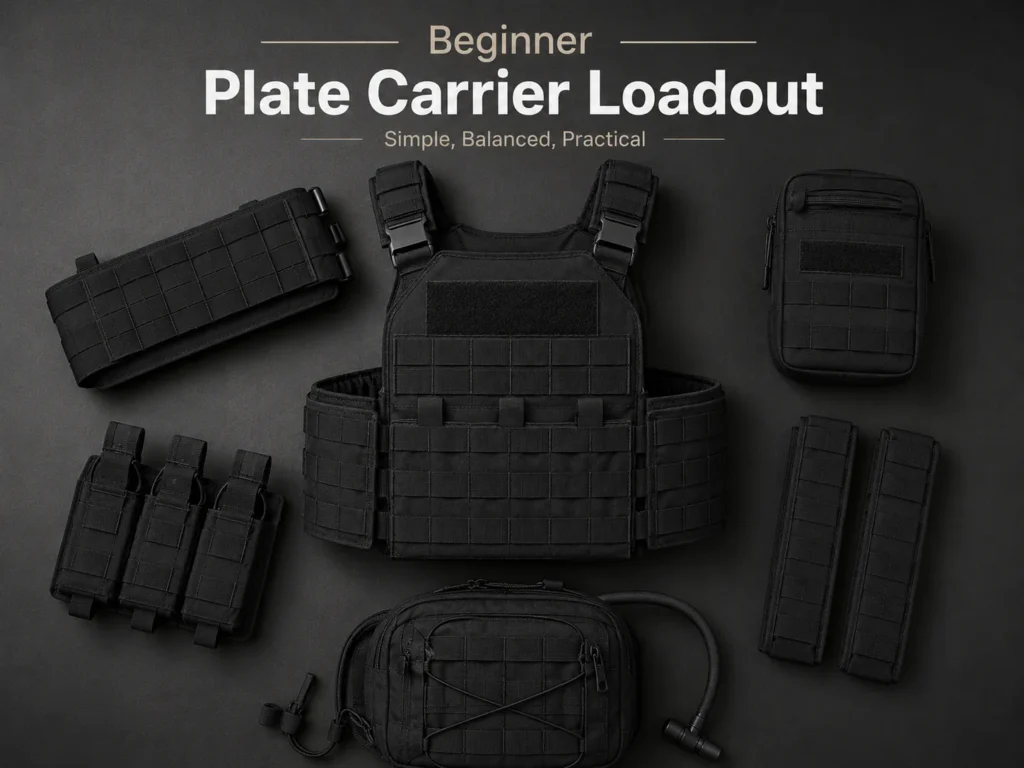
A beginner plate carrier setup should be simple, balanced, and practical. Many new users make the mistake of adding too much gear too quickly. A heavy, overloaded carrier may look impressive, but it can reduce mobility and comfort.
Start with the basics:
- Front magazine pouches
- A secure cummerbund
- A small admin or utility pouch
- Shoulder pads if needed
- A hydration or rear pouch only if necessary
- Minimal side-mounted gear
Keep the front area clean enough so you can move naturally. Avoid placing bulky pouches where they interfere with bending, crouching, or shoulder movement.
A good beginner setup should support your activity without making the carrier feel overloaded.
Plate Carrier Setup Based on Use Case
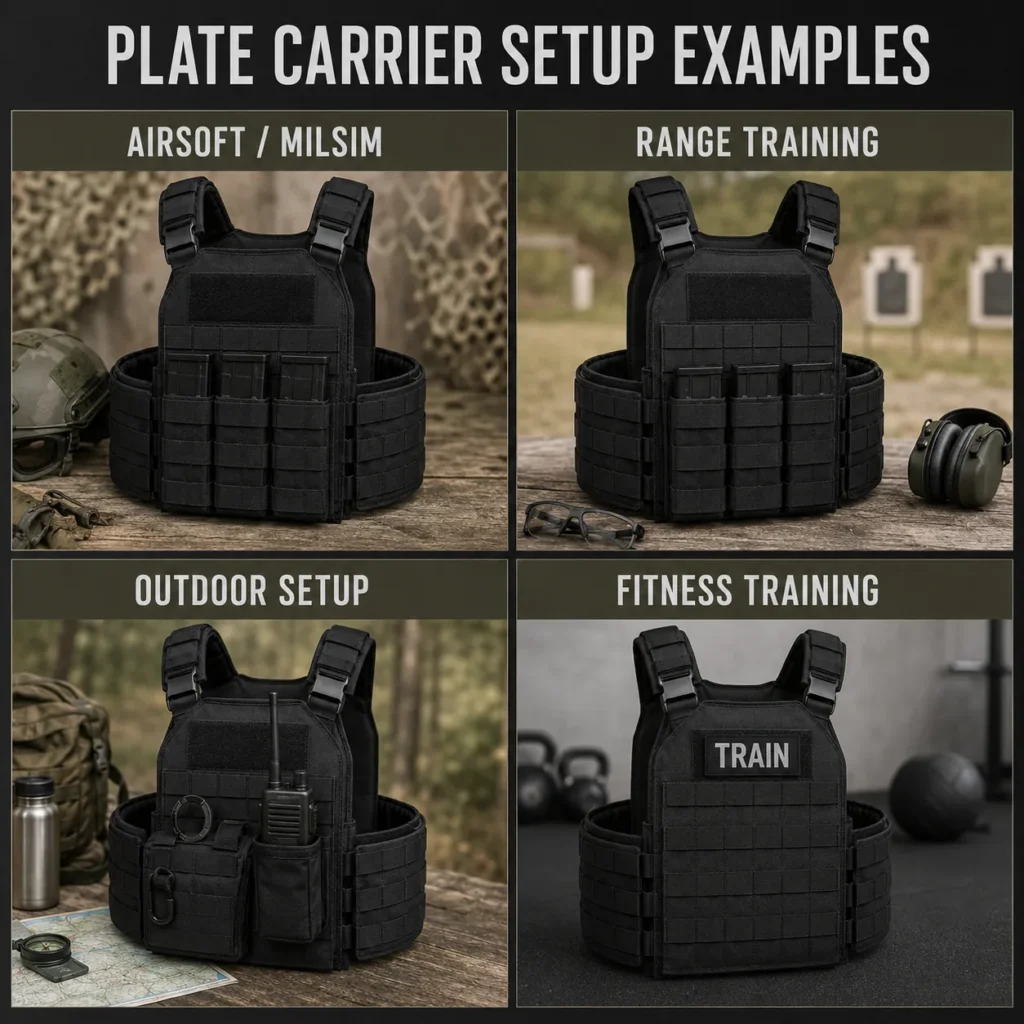
Airsoft and MilSim
For airsoft, comfort and mobility are usually more important than heavy-duty load capacity. A lightweight plate carrier with magazine pouches, an elastic cummerbund, and breathable padding can work well.
Recommended setup:
- Lightweight plate carrier
- Triple magazine pouch or front placard
- Elastic cummerbund
- Small utility pouch
- Optional hydration pouch
Range Training
For range use, focus on stability and practical gear placement. The carrier should stay secure during movement and allow quick access to magazines or accessories.
Recommended setup:
- Durable MOLLE plate carrier
- Front magazine pouches
- Adjustable cummerbund
- Shoulder pads
- Admin pouch
- Optional side pouch
Outdoor Tactical-Style Setup
For outdoor activities, comfort, breathability, and storage matter. Avoid overloading the front of the carrier. Balance weight between the front, sides, and back.
Recommended setup:
- Breathable plate carrier
- Utility pouch
- Hydration attachment
- Lightweight cummerbund
- Minimal front pouch setup
Fitness and Weighted Training
Some users wear plate carriers for weighted workouts. In this case, fit and stability are especially important. The carrier should not bounce excessively or restrict breathing.
Recommended setup:
- Minimalist carrier
- Secure shoulder straps
- Snug cummerbund
- Balanced front and rear weight
- Minimal external pouches
Common Mistakes When Buying a Plate Carrier
Mistake 1: Choosing Based Only on Looks
A plate carrier may look good in photos, but fit and function matter more. Always check sizing, adjustment range, material, and compatibility before buying.
Mistake 2: Overloading the Carrier
Beginners often add too many pouches and accessories. This can make the carrier heavy, uncomfortable, and harder to use. Start simple and add gear only when needed.
Mistake 3: Ignoring the Cummerbund
The cummerbund has a major impact on comfort and stability. A poor-fitting cummerbund can cause the carrier to shift or sag.
Mistake 4: Buying Without Checking Compatibility
Not every pouch, placard, or accessory fits every plate carrier. Check MOLLE spacing, hook-and-loop areas, buckle systems, and attachment points before purchasing accessories.
Mistake 5: Wearing the Carrier Too Low
A plate carrier should sit high on the chest and upper back. Wearing it too low can reduce mobility and make the setup feel unstable.
Plate Carrier Buying Checklist
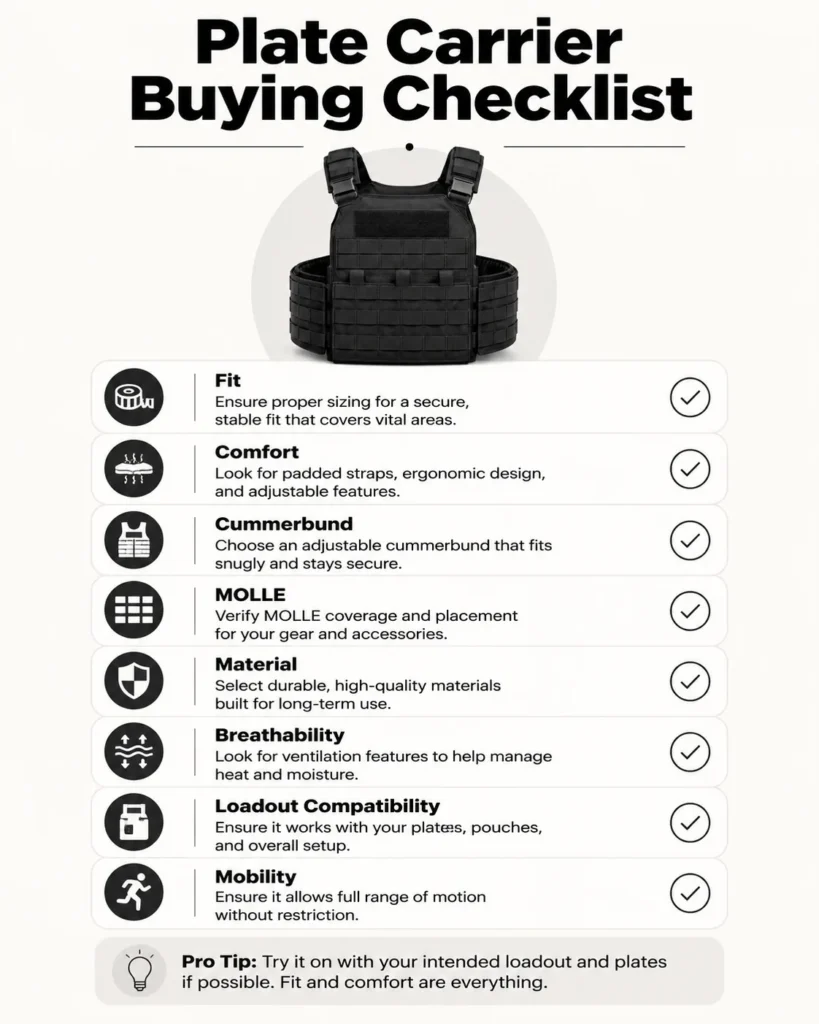
Before buying a plate carrier, review this checklist:
- Does it fit your intended use?
- Is the size compatible with your body and insert dimensions?
- Are the shoulder straps adjustable?
- Is the cummerbund comfortable and secure?
- Does it support MOLLE pouches?
- Does it work with the accessories you plan to use?
- Is the material durable enough for your activity?
- Does it allow good mobility?
- Is it breathable enough for long wear?
- Can you keep the setup balanced and practical?
If the answer is yes to most of these questions, the plate carrier is likely a good option for your needs.
Final Thoughts
Choosing the right plate carrier is about more than appearance. The best plate carrier for beginners should fit properly, feel stable, support your gear, and match your actual use case.
If you are just getting started, choose a carrier that is adjustable, modular, and comfortable. Start with a simple setup, then add pouches, cummerbund upgrades, placards, or rear attachments as your needs become clearer.
A good plate carrier should help you move better, organize your gear, and build a loadout that works for your training, airsoft, range, or outdoor activities.
FAQ
What is the best plate carrier for beginners?
The best plate carrier for beginners is one that fits well, offers adjustable shoulder straps, includes a secure cummerbund, and supports MOLLE or placard attachments. Beginners should start with a simple and lightweight setup instead of overloading the carrier with too many accessories.
How tight should a plate carrier be?
A plate carrier should be snug enough to stay stable during movement, but not so tight that it restricts breathing. The cummerbund should hold the carrier close to the body without causing discomfort.
Should a plate carrier sit high or low?
A plate carrier should sit high on the chest and upper back. It should not hang low over the stomach. A high and secure fit improves stability and mobility.
Do I need MOLLE on a plate carrier?
MOLLE is useful if you want to attach pouches and accessories. If you plan to customize your loadout, a MOLLE-compatible plate carrier is a good choice.
What accessories should I add first?
For beginners, start with basic magazine pouches, a comfortable cummerbund, and possibly a small utility pouch. Add more accessories only after you understand what you actually need.
Is an elastic cummerbund good for a plate carrier?
Yes, an elastic cummerbund can be a good option for comfort and flexibility. It helps the carrier fit close to the body while allowing natural movement. It is especially useful for lightweight and beginner-friendly setups.
Can I use a plate carrier for airsoft?
Yes, many airsoft players use plate carriers because they provide a customizable platform for carrying magazines, pouches, hydration gear, and other accessories. For airsoft, lightweight and breathable designs are usually preferred.
What is the difference between a plate carrier and a chest rig?
A plate carrier is built around front and rear plate bags and usually offers more structure. A chest rig is lighter and mainly designed to carry gear on the front of the body. Plate carriers offer more coverage and modularity, while chest rigs are often more lightweight and mobile.
How do I avoid overloading my plate carrier?
Start with only the gear you need most. Keep the front clean, avoid unnecessary side pouches, and balance weight between the front and back. A simple setup is usually more comfortable and practical than an overloaded one.
What should I look for in a quality plate carrier?
Look for adjustable fit, durable materials, reinforced stitching, MOLLE compatibility, a secure cummerbund, comfortable shoulder straps, and breathable inner padding. A good plate carrier should feel stable, practical, and comfortable during movement.