
A tactical backpack is more than just a rugged-looking bag. For outdoor users, travelers, commuters, and gear-focused professionals, the right tactical backpack can make daily carry more organized, comfortable, and reliable.
Unlike a regular backpack, a tactical backpack is usually designed with stronger materials, modular attachment points, multiple compartments, and practical storage features. Whether you need a backpack for EDC, hiking, travel, camping, outdoor training, or everyday work, choosing the right one depends on more than appearance.
In this guide, we’ll explain how to choose the best tactical backpack based on capacity, material, MOLLE compatibility, comfort, storage layout, and real-world use.
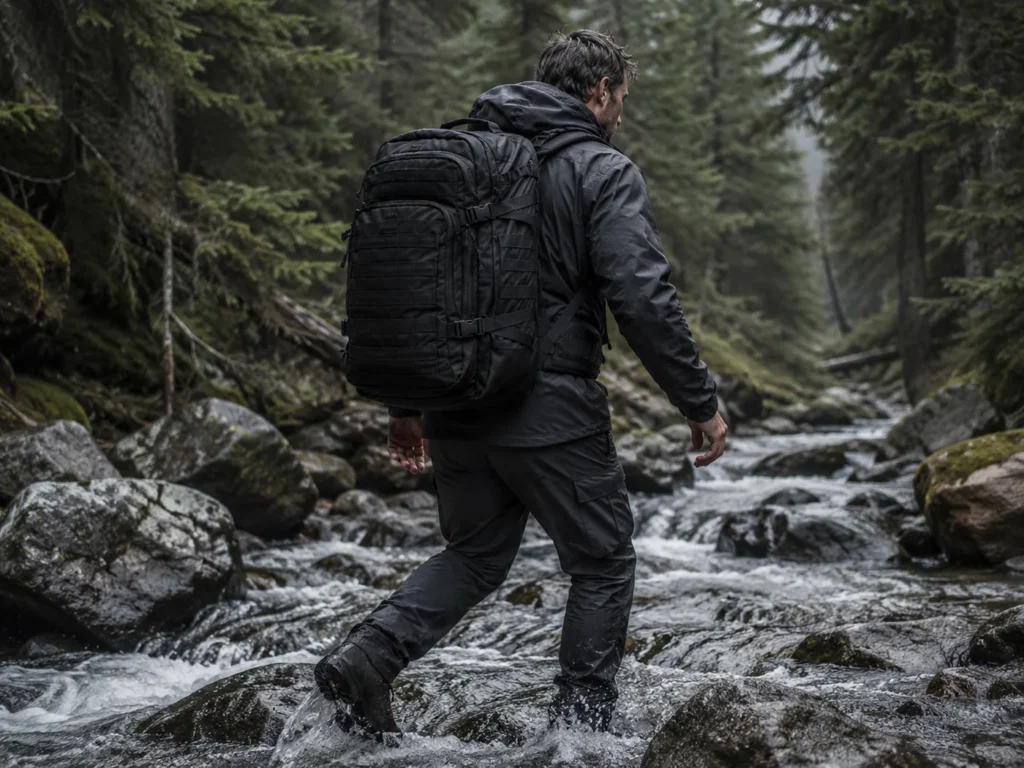
What Is a Tactical Backpack?
A tactical backpack is a durable, utility-focused backpack designed for carrying gear in an organized and accessible way. It often features MOLLE webbing, reinforced fabric, multiple compartments, compression straps, and hydration compatibility.
The word “tactical” does not mean it is only for military use. Today, tactical backpacks are widely used for:
- Everyday carry
- Hiking
- Camping
- Travel
- Outdoor work
- Gym gear
- Emergency kits
- Range gear
- Commuting
- Adventure and outdoor activities
The main advantage of a tactical backpack is its balance of durability, organization, and expandability.
1. Choose the Right Backpack Capacity
Capacity is one of the first things to consider when choosing a tactical backpack. A bag that is too small may not hold your essential gear, while a bag that is too large can feel bulky for daily use.
Small Tactical Backpacks: 15L–20L
A small tactical backpack is ideal for light daily carry. It works well for users who only need to carry basic items such as a wallet, phone, keys, water bottle, small tools, tablet, or light jacket.
Best for:
- EDC
- Short walks
- Light commuting
- Minimalist outdoor use
- Short cycling or walking trips
If you prefer a compact, lightweight setup, a small tactical backpack is a practical choice.
Medium Tactical Backpacks: 25L–35L
This is one of the most versatile size ranges. A medium tactical backpack can carry daily essentials, extra clothing, a laptop, water bottle, tools, and outdoor accessories without becoming too bulky.
Best for:
- EDC
- Hiking
- Travel
- Work
- Gym gear
- Overnight use
- Outdoor training
For most users, a 30L tactical backpack offers a strong balance between storage space and everyday comfort.
Large Tactical Backpacks: 40L and Above
Large tactical backpacks are better suited for users who need to carry more equipment over longer periods. They may be useful for camping, multi-day travel, outdoor work, or emergency preparation.
Best for:
- Multi-day trips
- Camping
- Heavy gear loading
- Bug-out bags
- Extended outdoor use
However, larger bags can be heavier and less convenient for daily use, so choose this size only if you truly need the extra capacity.
2. Check the Material and Durability
A tactical backpack should be built to handle outdoor environments and frequent use. Material quality directly affects durability, weight, water resistance, and long-term performance.
Common materials include:
600D Polyester
600D polyester is often used in lightweight tactical backpacks. It offers decent abrasion resistance and is usually more affordable. It is suitable for daily use, light outdoor activities, and casual travel.
900D or 1000D Nylon
Higher-denier nylon fabrics are generally stronger and more abrasion-resistant. A backpack made from 900D or 1000D nylon is better suited for outdoor activities, heavier loads, and rugged environments.
Water-Resistant Coating
Many tactical backpacks include a water-resistant coating to help protect gear from light rain or splashes. This does not always mean the bag is fully waterproof, but it can provide helpful protection in daily outdoor use.
When choosing a tactical backpack, look for reinforced stitching, durable zippers, strong buckles, and quality webbing. These small details often determine how well the backpack performs over time.
3. Look for MOLLE Compatibility
One of the most recognizable features of a tactical backpack is MOLLE webbing. MOLLE stands for Modular Lightweight Load-carrying Equipment. It allows users to attach compatible pouches, bottle holders, small gear bags, and other accessories.
A MOLLE backpack is useful because it gives you more flexibility. Instead of being limited to the built-in compartments, you can customize the outside of the bag based on your needs.
You can use MOLLE webbing to attach:
- Extra utility pouches
- Water bottle holders
- First aid pouches
- Tool pouches
- Carabiners
- Outdoor accessories
For EDC users, MOLLE can help organize small gear. For hikers and travelers, it can add extra storage without taking up internal space.
When choosing a tactical backpack, check whether the MOLLE webbing is placed on the front, sides, or both. More MOLLE areas usually mean more customization options.
4. Consider the Storage Layout
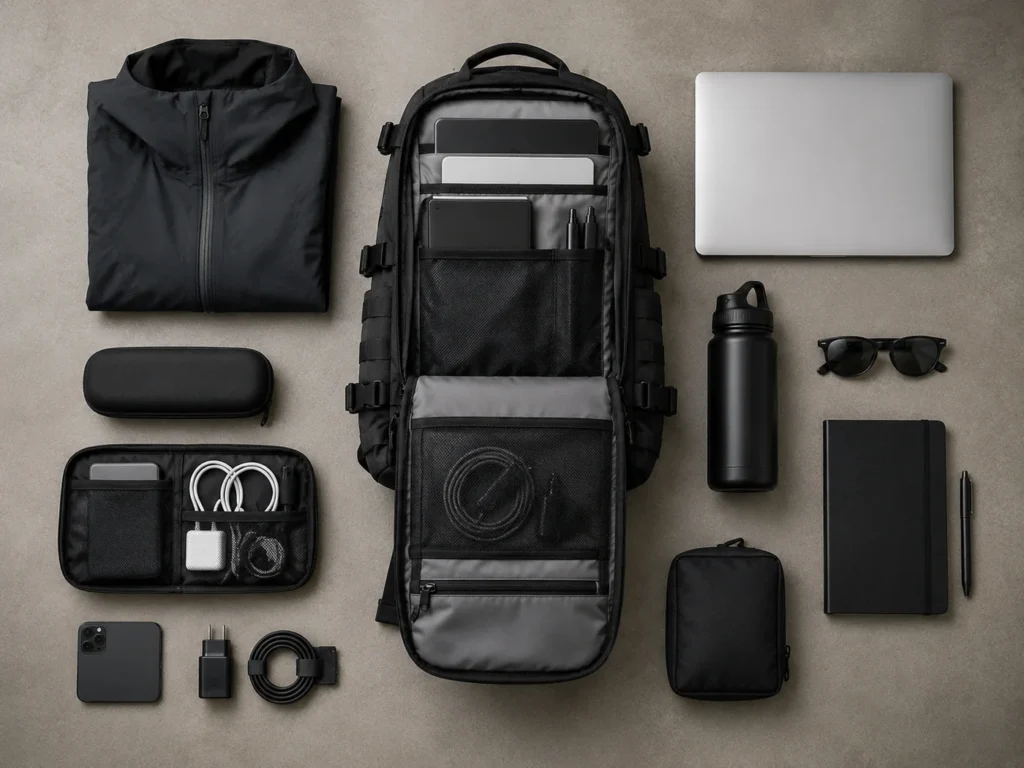
A good tactical backpack should make it easy to organize your gear. Instead of one large empty compartment, most tactical backpacks include multiple pockets and internal sections.
Useful storage features may include:
- Main compartment for clothing or larger gear
- Front admin pocket for small items
- Side pockets or side webbing
- Laptop compartment
- Hydration bladder pocket
- Internal mesh pockets
- Zippered accessory pockets
- Hook-and-loop panels
- Compression straps
If you carry tech gear, look for a padded laptop sleeve. If you use the backpack outdoors, a hydration bladder pocket can be helpful. If you carry tools or small accessories, an admin panel can keep everything organized.
The best tactical backpack is not always the one with the most pockets. It is the one with the right pocket layout for your specific use.
5. Make Sure It Is Comfortable to Carry
Durability is important, but comfort matters just as much. A tactical backpack may look strong, but if it is uncomfortable under load, it will not be practical for hiking, travel, or daily carry.
Look for these comfort features:
Padded Shoulder Straps
Wide, padded shoulder straps help reduce pressure on your shoulders, especially when carrying heavier gear.
Breathable Back Panel
A breathable back panel can improve airflow and reduce sweat during outdoor use.
Chest Strap
A chest strap helps stabilize the backpack and prevents the shoulder straps from sliding outward.
Waist Belt
A waist belt can help distribute weight more evenly, especially on larger tactical backpacks.
Compression Straps
Compression straps help tighten the load and reduce movement inside the bag. This is especially useful for hiking, cycling, or travel.
Before choosing a backpack, think about how long you will carry it and how much weight you usually pack.
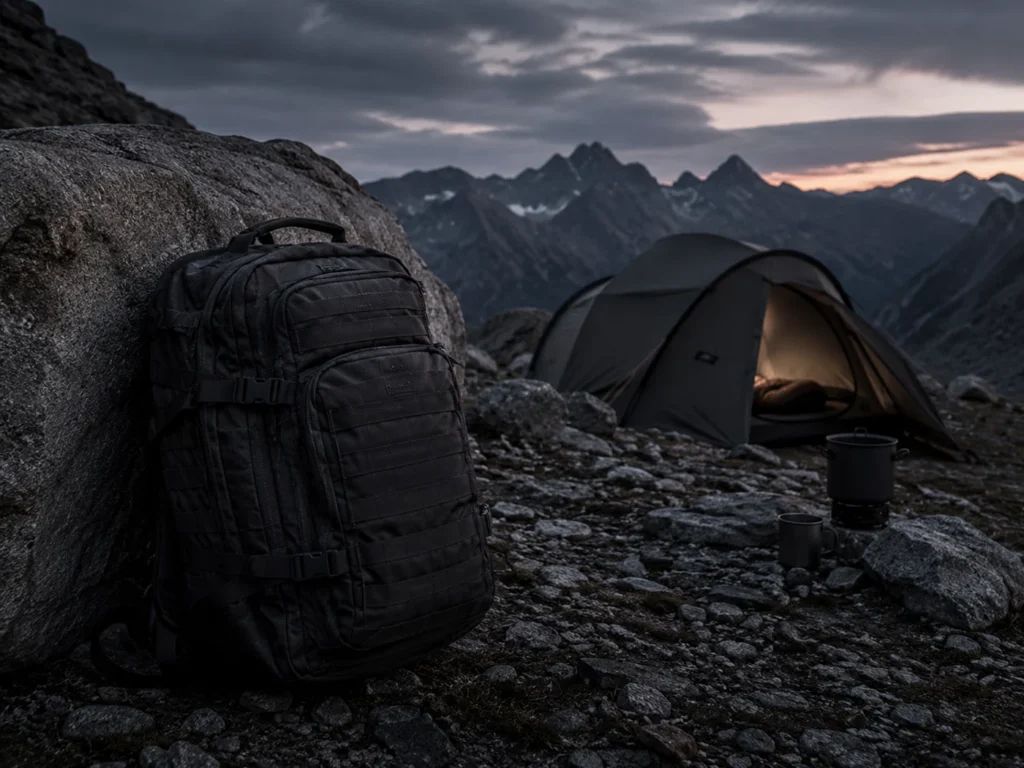
6. Match the Backpack to Your Main Use Case
Different users need different backpack features. The right tactical backpack for hiking may not be the same as the best one for daily commuting.
Tactical Backpack for EDC
For everyday carry, choose a compact or medium-sized tactical backpack with organized compartments. A laptop sleeve, front admin pocket, and water bottle storage are useful for daily use.
Recommended features:
- 18L–30L capacity
- Laptop compartment
- Lightweight design
- Multiple small pockets
- Comfortable shoulder straps
Tactical Backpack for Hiking
For hiking, comfort and stability are very important. Choose a backpack with breathable padding, compression straps, hydration compatibility, and durable fabric.
Recommended features:
- 25L–35L capacity
- Hydration bladder pocket
- Chest strap
- Breathable back panel
- Water-resistant material
- MOLLE expansion options
Tactical Backpack for Travel
For travel, organization and accessibility matter most. A good travel tactical backpack should hold clothing, electronics, documents, chargers, and personal items in an organized way.
Recommended features:
- 30L–40L capacity
- Large main compartment
- Laptop sleeve
- Multiple zippered pockets
- Strong carry handle
- Durable zippers
Tactical Backpack for Outdoor Work
For outdoor work, choose a backpack with strong material, reinforced stitching, and modular storage. MOLLE webbing can help attach extra tool pouches or small gear bags.
Recommended features:
- 30L or larger capacity
- Heavy-duty fabric
- MOLLE webbing
- Reinforced stitching
- Practical pocket layout
7. Pay Attention to Expandability
Some tactical backpacks include expandable compartments or compression systems. This is useful when you need flexibility.
For example, a backpack may stay compact for everyday use but expand when you need more space for travel, clothing, or outdoor gear.
Expandable tactical backpacks are useful for:
- Weekend trips
- Variable gear loads
- Travel
- Outdoor activities
- Emergency kits
If you want one backpack for multiple uses, an expandable design can be a smart choice.
8. Choose the Right Color and Style
Color may seem like a small detail, but it affects where and how you use the backpack.
Common tactical backpack colors include:
- Black
- Khaki
- Ranger green
- Gray
- Coyote brown
- Camouflage
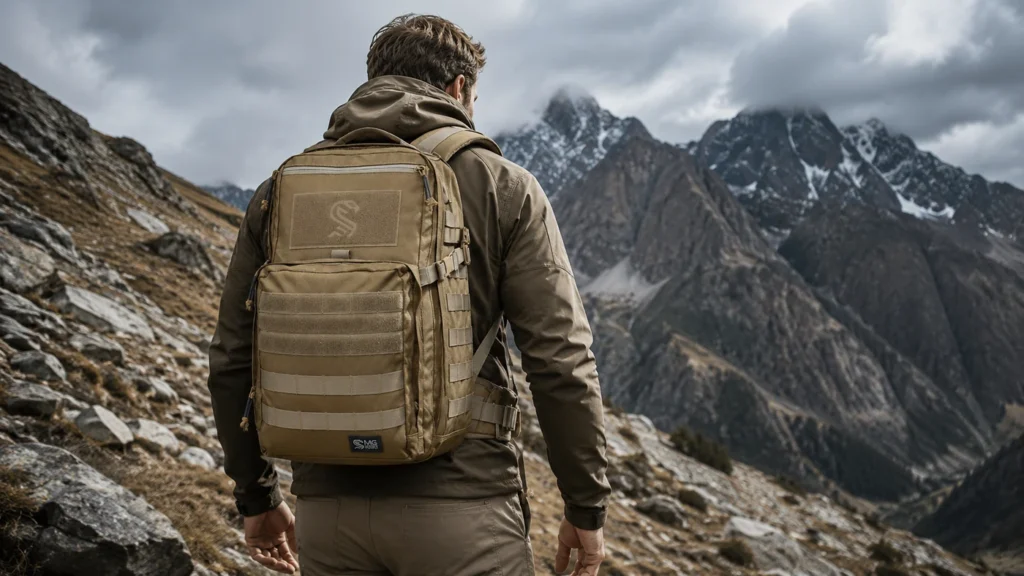
For everyday commuting or urban use, black, gray, or khaki usually looks more versatile. For outdoor environments, green, brown, or camouflage may fit better with the setting.
If you want a backpack that works for both city and outdoor use, choose a clean, low-profile color.
Tactical Backpack Buying Checklist
Before buying a tactical backpack, ask yourself these questions:
- What will I mainly use it for: EDC, hiking, travel, or outdoor work?
- What capacity do I need?
- Is the material strong enough for my use?
- Does it have MOLLE webbing?
- Does it include enough compartments?
- Can it carry a laptop or hydration bladder?
- Are the shoulder straps and back panel comfortable?
- Does it have compression straps?
- Is the backpack too bulky for daily use?
- Does the color match my intended use?
A good tactical backpack should fit your real needs, not just look rugged.
Final Thoughts
Choosing the right tactical backpack comes down to finding the right balance between durability, comfort, organization, and capacity. For daily carry, a compact and well-organized bag may be enough. For hiking or travel, a medium-sized tactical backpack with MOLLE webbing, hydration compatibility, and strong material is often a better choice.
The best tactical backpack is the one that fits your lifestyle, carries your gear efficiently, and stays comfortable through everyday use and outdoor conditions.
Whether you are preparing for hiking, travel, commuting, outdoor work, or everyday carry, a reliable tactical backpack can help keep your gear organized and ready when you need it.
Explore MGFLASHFORCE Tactical Backpacks
Built for everyday carry, outdoor use, hiking, travel, and gear organization, MGFLASHFORCE tactical backpacks combine durable materials, practical storage layouts, MOLLE compatibility, and rugged outdoor style.
Find the right tactical backpack for your next adventure.