
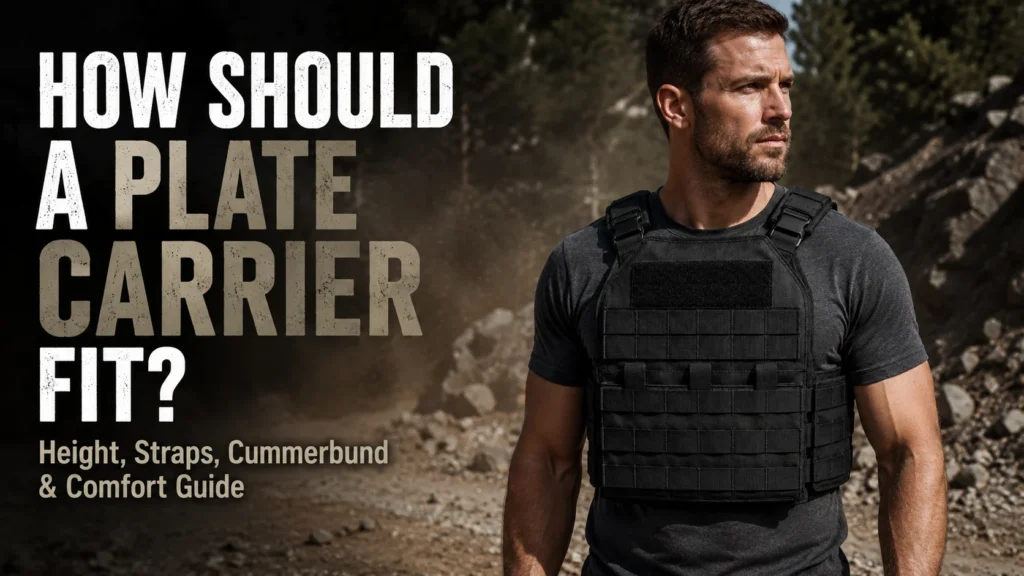
Introduction
A properly fitted plate carrier is the foundation of any effective setup. Whether you are using it for airsoft, range training, outdoor activities, or fitness training, fit determines everything—comfort, stability, mobility, and even safety.
Many beginners make the mistake of focusing on accessories first. But in reality, fit comes before loadout. A poorly fitted plate carrier will feel uncomfortable no matter how expensive or well-designed it is.
This guide explains exactly how a plate carrier should fit, step by step, so you can build a stable and efficient setup from the start.
What Does a Proper Plate Carrier Fit Look Like?
A correctly fitted plate carrier should feel:
- Snug but not restrictive
- Stable during movement
- High on the chest (not hanging low)
- Balanced front and back
- Comfortable when breathing and bending
If your plate carrier shifts, bounces, or feels heavy on one side, the fit is not correct yet.
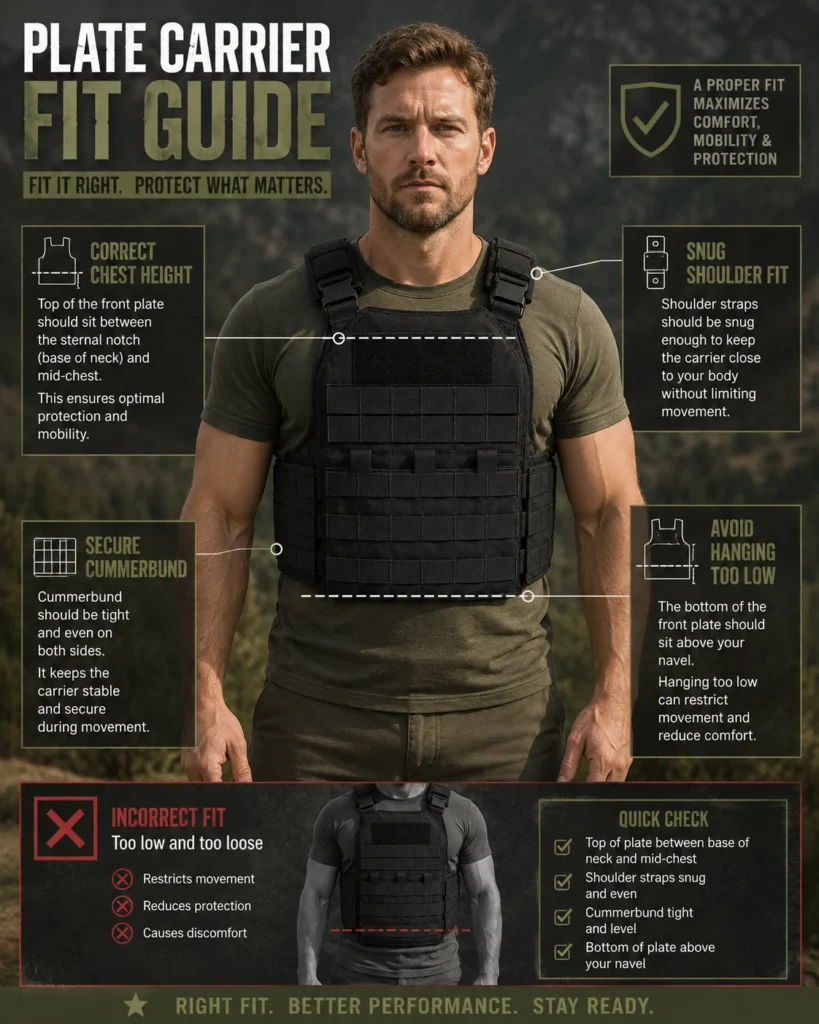
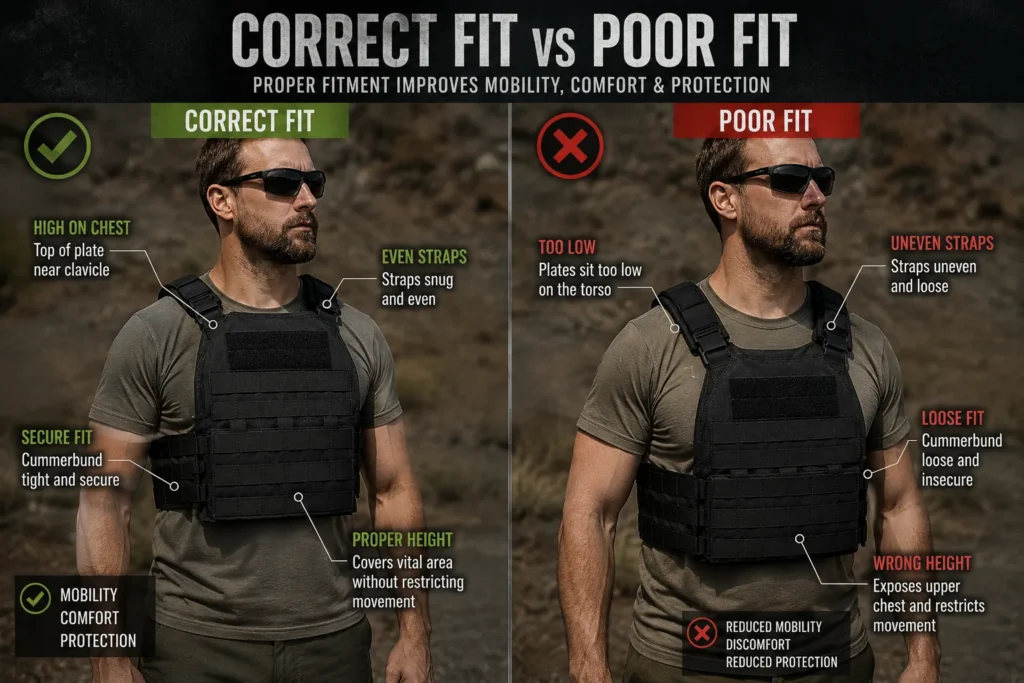
1. Correct Plate Carrier Height (Most Important Factor)
The most common beginner mistake is wearing the plate carrier too low.
A proper plate carrier should sit:
- High on the chest
- Just below the collarbone
- Upper abdomen not exposed
- Rear panel aligned with upper back
Why Height Matters
If the carrier sits too low:
- It restricts movement when running or crouching
- It creates imbalance under load
- It reduces protection area (if using plates)
- It feels heavy and unstable
A good reference point is the collarbone line. The top of the front plate bag should sit just below it.
2. Shoulder Strap Fit (Stability & Comfort)
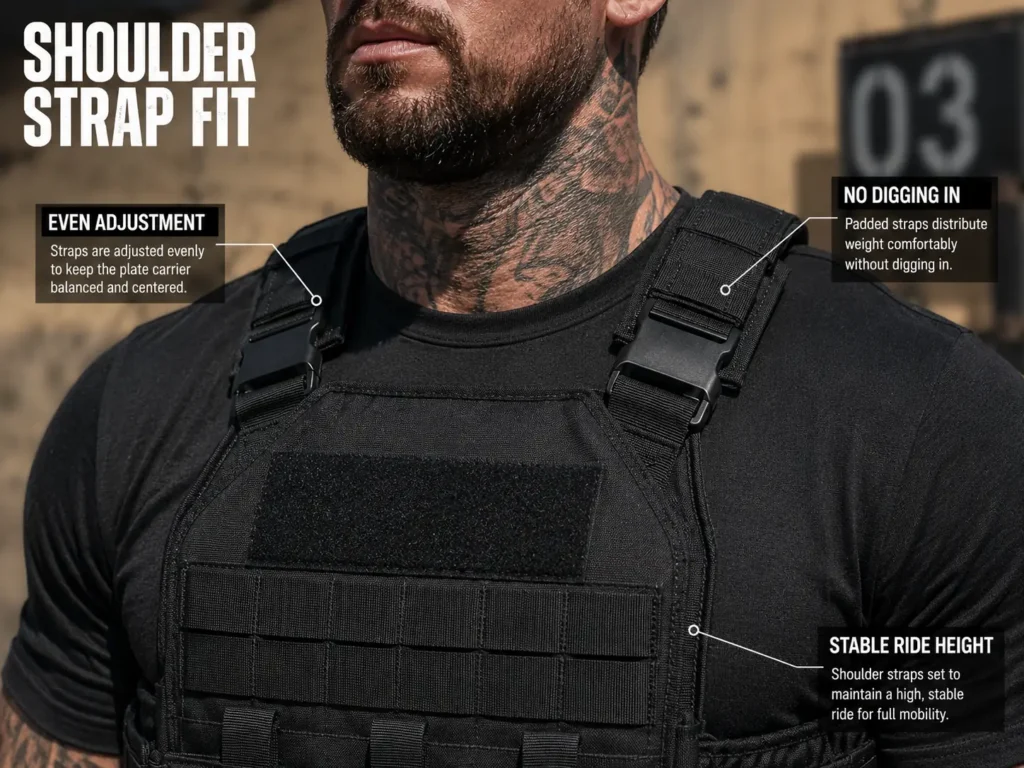
Shoulder straps control vertical stability. They should be adjusted evenly on both sides.
Proper Shoulder Fit Should:
- Sit flat on shoulders
- Not dig into skin
- Distribute weight
- evenlyKeep plate carrier from bouncing
Common Mistake
Too loose → carrier sags and moves
Too tight → shoulder fatigue and restricted breathing
The ideal setting is a firm but comfortable tension, where the carrier stays in place even during movement.
3. Cummerbund Fit (Core Stability System)
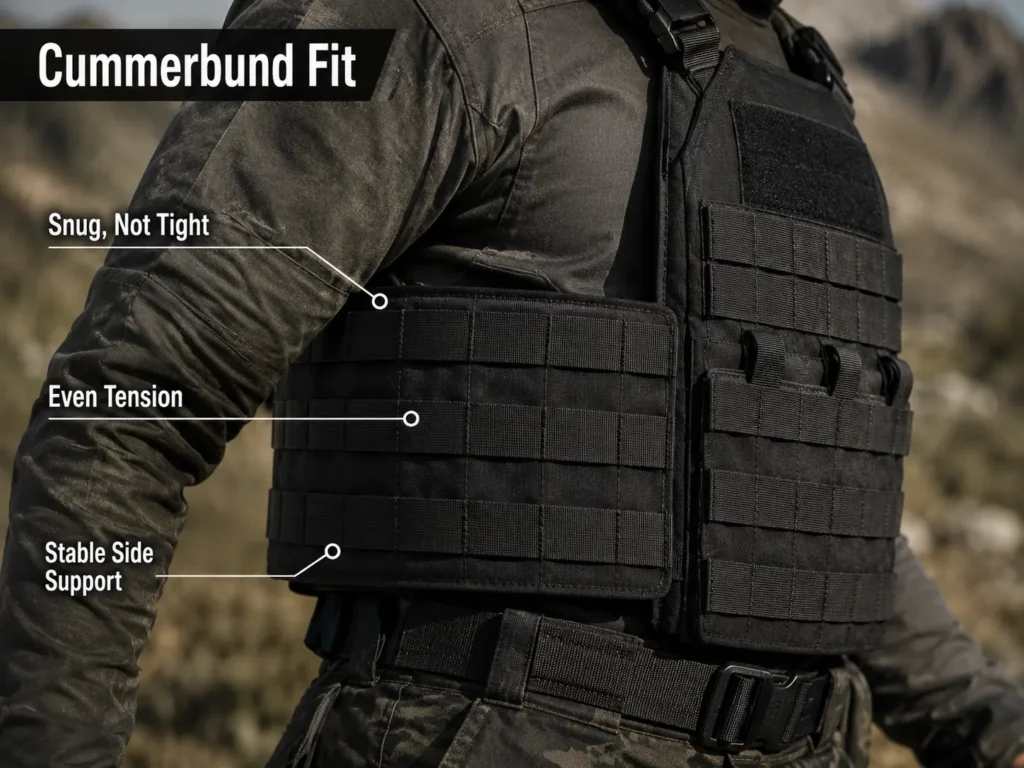
The cummerbund is the “locking system” of your plate carrier. It wraps around your torso and keeps everything stable.
Proper Cummerbund Fit:
- Snug around midsection
- Even pressure on both sides
- No shifting when twisting or bending
- Allows full breathing capacity
How Tight Should It Be?
You should be able to:
- Take a deep breath comfortably
- Move arms freely
- Bend and rotate torso
- Keep carrier stable without wobble
If it feels like a corset, it’s too tight. If it moves side to side, it’s too loose.
4. Front Load Balance (Avoid Overloading)
Even with a perfect fit, poor load distribution can ruin performance.
Beginner Rule:
Keep the front lightweight.
Recommended front setup:
- 1–3 magazine pouches
- Small admin pouch (optional)
- Minimal bulk attachments
Avoid:
- Heavy tools on front lower section
- Overstacked MOLLE pouches
- Uneven weight on one side
A balanced front keeps the carrier stable and improves mobility.
5. Side Fit (Cummerbund Alignment)
Side fit is often ignored, but it affects overall comfort significantly.
A proper side fit:
- Wraps evenly around the torso
- Does not dig into ribs
- Does not leave gaps between body and carrier
- Keeps front and rear aligned
If the cummerbund is uneven, the entire carrier will shift during movement.
6. Mobility Test (Final Fit Check)
Once adjusted, always test your plate carrier using real movement.
Perform these actions:
- Walk fast
- Crouch down
- Bend forward
- Raise arms
- Rotate torso
- Simulate running
A Proper Fit Should:
- Stay stable
- Not bounce
- Not shift left or right
- Not restrict
- breathing
- Feel “locked in” but comfortable
If anything moves excessively, re-adjust shoulder straps or cummerbund first.
7. Common Plate Carrier Fit Mistakes
Mistake 1: Wearing It Too Low
Most beginners wear it like a vest. This reduces stability and comfort.
Mistake 2: Over-Tightening Everything
Too tight = restricted breathing and fatigue.
Mistake 3: Ignoring Balance
Uneven load causes one side to pull down.
Mistake 4: Adding Gear Before Adjusting Fit
Accessories should come after proper fitting.
Mistake 5: Not Testing Movement
A static fit is not enough—movement testing is essential.
Beginner Plate Carrier Fit Checklist
Before finalizing your setup, confirm:
- Plate carrier sits high on chest
- Shoulder straps are even and secure
- Cummerbund is snug but breathable
- No shifting during movement
- Front load is lightweight
- Back panel aligned properly
- Full range of motion is possible
If all answers are yes, your fit is correct.
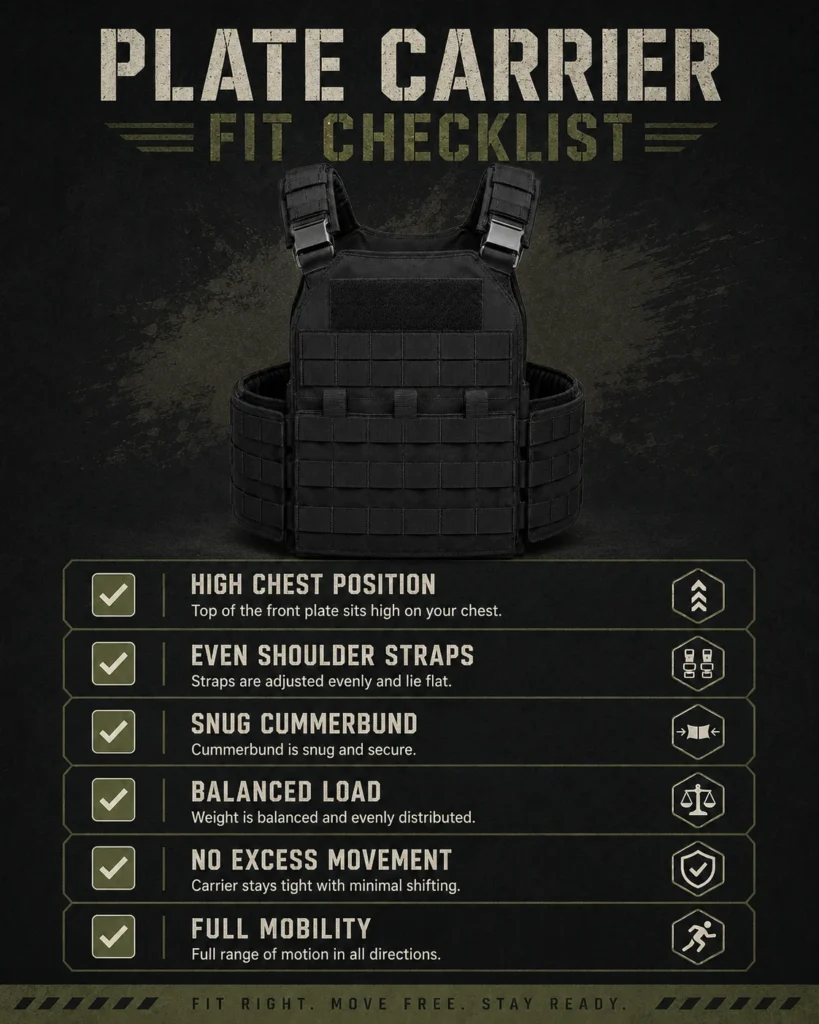
Plate Carrier Fit for Different Uses
Airsoft / MilSim
- Slightly looser for mobility
- Lightweight front setup
- Focus on speed and movement
Range Training
- Stable and balanced
- Moderate tightness
- Easy access to pouches
Outdoor Use
- Comfort-focused fit
- Better ventilation
- Hydration-friendly setup
Fitness Training
- Tight and minimal setup
- No unnecessary pouches
- Maximum stability
Why Proper Fit Matters More Than Gear
A high-end plate carrier with poor fit will always perform worse than a mid-range carrier with perfect fit.
Good fit ensures:
- Better endurance
- Faster movement
- Reduced fatigue
- Higher comfort
- More efficient loadout use
Fit is the foundation. Everything else is secondary.
Recommended Beginner Setup
- Lightweight plate carrier
- Elastic cummerbund
- Triple magazine pouch
- Small utility pouch
Final Thoughts
A properly fitted plate carrier should feel like part of your body—not equipment sitting on top of it.
The key principles are simple:
- High chest position
- Snug shoulder straps
- Secure but breathable cummerbund
- Balanced load distribution
- Movement-tested stability
Once your fit is correct, you can confidently build your loadout with pouches, accessories, and modular upgrades.